
Vad skönt, att utpräglad kommersiell design ämnad till den breda massan och mångas smak kan vinna Svenska Designpriset. Kan behövas i denna redan uttjatade lågkonjunktur. ICA I love Eco bidrar till att hela ICAs ekologiska ökar med 70% jämfört med 2007 på halvårsbasis, schysst ROI.
För övrigt, bidragen utställda igår på Moderna var i klass med Cannes och däröver. Se dem när de åker ut på turné Stockholm, Göteborg och Malmö. Kände mig dubbelt stolt att svensk design håller hög klass.
Visar inlägg med etikett Design. Visa alla inlägg
Visar inlägg med etikett Design. Visa alla inlägg
torsdag 9 oktober 2008

torsdag 28 augusti 2008
The Beautiful Fashion Tale Magazine

I really like the new Fashion Tale Magazine. Beautiful photography, interesting models, superb fashion sense all around.
They also have the entire thing on the web for your browsing pleasure.
Beautiful work, and hats of to Creative Director Carl Wahlström and Art Director Hanna Hedman. (I capitalized their titles on purpose).
måndag 11 augusti 2008
Cycle in Style With These Fine Helmets
So, you want to swoosh down the street in style, but you don't want to crack your skull open in case of a crash – what to do?
Well, the Danish (who else...) solved the problem. With protective helmets disguised as stylish hats, Yakkay might well be a smash hit in style-conscious communities across the globe. Just look at these beauties:

torsdag 7 augusti 2008
Digital Design Is Still a Child
Humanity has been pretty good at graphic design for quite some time now (though we may have called it something else early on). The same goes for packaging design. Sure there have been plenty of innovations along the way such as the printing press, photography and modern day packaging technology, but still.
I guess you could say that interaction design was born at the same time as the first stick n' stone tools, but more systematic and advanced interaction design can perhaps be considered approximately as old as the industrial revolution.
Digital interaction design, meaning design for interacting with computers, is young. DID aimed at the general public, is really young. Born by Xerox Parc and Apple (and copied by Microsoft), the window-based interaction model still prevails.
But being this young, I think we've only seen the first beginnings of a huge market for digital design (including DID). The move towards digital media is natural and inevitable, and we're still stuck i a design world that is very static. We're moving towards a "one machine"-world, where we'll interact with data in different ways, not neccessarily web pages. RSS-readers is an early example of this.
The more basic question of how to interact with data through a "browser" is one that many are trying to answer. Not least the people of Mozilla labs. They have suggested a model for a future browser that looks like this (corny film, but you'll get the point):
Aurora (Part 1) from Adaptive Path on Vimeo.
Can you imagine your grandmother trying to work this interface? Neither can I. I think that they have made the classic mistake of being too complicated and too techy. But that might just be me.
But if you spot a good digital design agency with razor sharp DID-skills, give me a call. I want to buy some stock and get rich.
måndag 4 augusti 2008
Design Talks: Supercars of the late 60's
On my new little section "Design Talks" I'll look at some design case studies that interest me. First out is the supercars of the late 60's and early 70's. They are interesting for several reasons. The designs have sprung from technical innovations like the mid-engine layout, but are also politically inspired by the space age race to the moon. Lines are simple technical and clean resembling the architecture and interior design of the late 90's or perhaps modern day highly designed tools. Only, it's the other way around.
With the innovation of the mid-engine layout and with space age inspiration, the 60's gave birth to the first incarnation of the supercar. This concept would keep on evolving until mid 70's where the oil crisis and an economic downward spiral put an end to the futuristic supercar dreams.
Besides improving car handling, the mid-engine layout enabled designers to integrate the angle of the shorter bonnet with the windshield, effectively creating a bulletlike profile. The 1968 Alfa Romeo Carabo, designed by Marcello Gandini is a nice example.

It's incredible to me how modern-looking some of these cars were. Look for example at this spaceship inspired 1970 Lancia Stratos:

There were also more extreme concept cars. The 1970 Ferrari Modulos for example, that bent the rules and limits of the Ferrari brand. The concept picked up no less than 22 design awards worldwide.


The 1970 Porsche Tapiro is another amazing car from Giorgetto Giugiaro of Ital Design.


The Tapiro is also the forerunner and design inspiration of the legendary Lotus Esprit. Below are sketches for the Esprit, and you can clearly see the similarities to the Tapiro above.

Introduced in 1972, the Esprit was the symbol of luxury and power in movies like Pretty Woman, Basic Instinct, For Your Eyes Only and The Spy Who Loved Me. Look at the skies on the roof. Got to love that.

Shown at the same Ital Design show as the Esprit was also my favorite of them all – the 1972 Maserati Boomerang. Give me one of these, and I'll drive you anywhere. Look at the interior design of this thing!


With this little design talk I hope to inspire a little bit of courage. These cars were very extreme at the time of their conception. They still are today.
The design world needs courage and outrageousnes. It is what pushes the limits. I doubt that the highly succesful Lotus Esprit would have ever existed without its less famous predecessors. So keep moving, keep pushing the envelope and have fun. This is the only way to evolve.
Pictures and info from www.lotusespritturbo.com.
With the innovation of the mid-engine layout and with space age inspiration, the 60's gave birth to the first incarnation of the supercar. This concept would keep on evolving until mid 70's where the oil crisis and an economic downward spiral put an end to the futuristic supercar dreams.
Besides improving car handling, the mid-engine layout enabled designers to integrate the angle of the shorter bonnet with the windshield, effectively creating a bulletlike profile. The 1968 Alfa Romeo Carabo, designed by Marcello Gandini is a nice example.
It's incredible to me how modern-looking some of these cars were. Look for example at this spaceship inspired 1970 Lancia Stratos:
There were also more extreme concept cars. The 1970 Ferrari Modulos for example, that bent the rules and limits of the Ferrari brand. The concept picked up no less than 22 design awards worldwide.
The 1970 Porsche Tapiro is another amazing car from Giorgetto Giugiaro of Ital Design.
The Tapiro is also the forerunner and design inspiration of the legendary Lotus Esprit. Below are sketches for the Esprit, and you can clearly see the similarities to the Tapiro above.
Introduced in 1972, the Esprit was the symbol of luxury and power in movies like Pretty Woman, Basic Instinct, For Your Eyes Only and The Spy Who Loved Me. Look at the skies on the roof. Got to love that.
Shown at the same Ital Design show as the Esprit was also my favorite of them all – the 1972 Maserati Boomerang. Give me one of these, and I'll drive you anywhere. Look at the interior design of this thing!

With this little design talk I hope to inspire a little bit of courage. These cars were very extreme at the time of their conception. They still are today.
The design world needs courage and outrageousnes. It is what pushes the limits. I doubt that the highly succesful Lotus Esprit would have ever existed without its less famous predecessors. So keep moving, keep pushing the envelope and have fun. This is the only way to evolve.
Pictures and info from www.lotusespritturbo.com.
tisdag 24 juni 2008
Communication Driven by Design
In Cannes I got the question several times why I worked in the design business and not in the advertising business, and for how long I intend to stay. My answer was: I intend to stay with it forever. Regardless of how long I work in "the design business", I will always keep design as a main focus. I'm in the business of communication, and to me, that business is severely crippled without design. The designer Yves Behar perhaps says it best when he talks about design being the glue that holds all other aspects together. Watch his TED-talk below and be inspired. I would love to work with this guy.
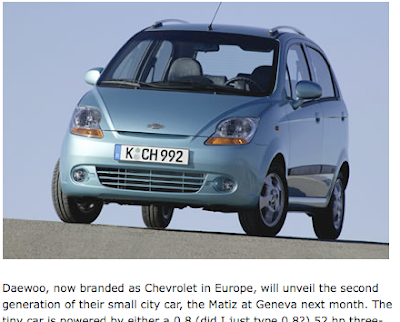
In the talk he also quotes somebody saying that "advertising is the prize companies pay for being unoriginal". And though I don't entirely agree with this quote, there is some truth in it. With functionality becoming increasingly similar between products, brand personality is what sets products appart, and design plays a very important role in the building of this brand personality. Imagine for a second two different computers looking exactly the same, but with different brand names on them. It feels cheap and fake. Chevrolet and Daewoo selling the same car with different names on them is a real life example of this.
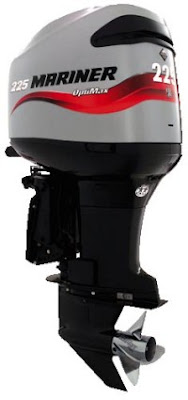
An example of the opposite is boat outboard engine brands Mercury and Mariner. Two identical products sporting different design and communication, and consequently attract two different target groups.

Another good example of this is Coke Light and Coke Zero. I don't have to show you this one, but they've done incredible work in making the feminine Coke Light macho.
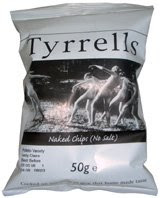
Yet another example that I use a lot to explain how advertising and design should be idea driven and work together is that of naked chips. An ordinary approach for a design agency when presented with the brief to create packaging for the product "chips without salt" would be to take the usual bag, type "no salt chips" on it and make it a different color. Maybe light blue. When giving this product to the advertising agency, they can end up doing anything, because there is no idea in the new packaging at all. Another design and branding approach would be to put a bunch of naked people on the bag and call it "Naked Chips". Leave this new design to the same advertising agency, and you'll probably end up with some amazing campaign ideas. Naked chips is a real life example of design found in a London grocery store.
My final example of branding and design driven campaigns is Diamond Shreddies, a Clio winner campaign that was much talked about this year in Cannes. This link will take you to the You Tube search page for Diamond Shreddies. See if you can figure out what's going on.
My point here is that strong branding and design should be at the core of any communications effort. Like I said – watch the Yves Behar talk below and be inspired. When watching the talk, take special note of the "Why Water" case, and consider if good communication could be made out of this design concept. Myself, I got about ten different ideas instantly.
In the talk he also quotes somebody saying that "advertising is the prize companies pay for being unoriginal". And though I don't entirely agree with this quote, there is some truth in it. With functionality becoming increasingly similar between products, brand personality is what sets products appart, and design plays a very important role in the building of this brand personality. Imagine for a second two different computers looking exactly the same, but with different brand names on them. It feels cheap and fake. Chevrolet and Daewoo selling the same car with different names on them is a real life example of this.

An example of the opposite is boat outboard engine brands Mercury and Mariner. Two identical products sporting different design and communication, and consequently attract two different target groups.


Another good example of this is Coke Light and Coke Zero. I don't have to show you this one, but they've done incredible work in making the feminine Coke Light macho.
Yet another example that I use a lot to explain how advertising and design should be idea driven and work together is that of naked chips. An ordinary approach for a design agency when presented with the brief to create packaging for the product "chips without salt" would be to take the usual bag, type "no salt chips" on it and make it a different color. Maybe light blue. When giving this product to the advertising agency, they can end up doing anything, because there is no idea in the new packaging at all. Another design and branding approach would be to put a bunch of naked people on the bag and call it "Naked Chips". Leave this new design to the same advertising agency, and you'll probably end up with some amazing campaign ideas. Naked chips is a real life example of design found in a London grocery store.

My final example of branding and design driven campaigns is Diamond Shreddies, a Clio winner campaign that was much talked about this year in Cannes. This link will take you to the You Tube search page for Diamond Shreddies. See if you can figure out what's going on.
My point here is that strong branding and design should be at the core of any communications effort. Like I said – watch the Yves Behar talk below and be inspired. When watching the talk, take special note of the "Why Water" case, and consider if good communication could be made out of this design concept. Myself, I got about ten different ideas instantly.
Prenumerera på:
Inlägg (Atom)